Easter Games

Zoonomaly Unblocked

Zoonomaly Cat

Choo‑Choo Charles

Palworld
Weekly Picks
Zoonomaly Unblocked
Zoonomaly Cat
Choo‑Choo Charles
Palworld




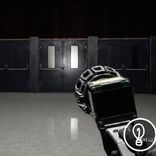
What happens when you boot up a vocal impression game expecting a roster of characters and instead find an empty folder waiting to be filled? That’s the exact moment most new players hit in The Choicer Voicer, and it changes everything about how the rest of a session goes.
| Genre | Vocal impression party game / game show |
| Platform | Windows PC |
| Players | 1–4 (local) |
| Status | Early access alpha |
Unlike most party games in this space, The Choicer Voicer arrives with almost no built-in material. There’s a judge panel, a host, a studio, and a working microphone input, but no pre-loaded cast of characters or catalog of sound clips to perform. The entire game is a scoring engine waiting for someone to feed it content.
This design choice is exactly why sessions vary so wildly between groups. Two people running the identical build of the game can end up with completely different sessions depending only on what they’ve dropped into the active content pack. It’s closer in spirit to a karaoke machine than a scripted game with fixed jokes.
New players often assume this is a bug or an unfinished build rather than the intended structure, which is a fair first reaction, but the game is designed this way on purpose from the very first launch screen.
Making a voice pack is deliberately low-effort: dropping audio files into a folder is functionally the whole process. Packs can be built around anything — obscure quotes, niche memes, a specific show’s dialogue — and once a pack exists, it plugs into every part of the game simultaneously.
A common early mistake is loading in one small pack, burning through five or six clips in a single sitting, and assuming that thin experience is simply how the game plays. A larger pack split by mood or theme changes the whole shape of a session almost immediately.
The core loop is easy to describe: a clip plays, a player performs it into the microphone, and the judge panel scores the attempt. Between one and four players can sit in the studio at once, with computer-controlled judges handling every round instead of relying on other humans to vote.
Players who stick with the format start noticing patterns in what earns higher marks — timing, pitch matching, and clarity all seem to factor in — even though the underlying judging logic in the game is never explained outright. That opacity is one of the more debated points among players who treat this less like a party bit and more like a game they’re trying to get good at.
A performer chasing laughs and a competitive player chasing a high score from the same judge panel will walk away from an identical session with completely different impressions of it.
The most consistently reported issue with The Choicer Voicer is microphones simply failing to record, which for some setups makes the game effectively unplayable. This appears tied to how the game’s underlying engine handles surround-sound configurations, an area where its audio engine reportedly still lags behind more common features.
Some players have worked around it by routing audio through a virtual output device and monitoring it separately through external software, but there’s no built-in fix in the current alpha build. Players on plain stereo setups almost never encounter this at all, which makes the split in community experiences feel almost arbitrary from the outside.
Foundational code that’s roughly two years old is part of the reason this hasn’t been resolved quickly — features like proper microphone routing weren’t part of the original plan when that code was first written.
Outside the judged studio format, The Choicer Voicer includes Dub Mode, where a player records a voiceover over a chosen scene instead of chasing a score. It strips away the judge panel entirely, making it a natural entry point for players who want to try performing without a number attached to the result.
A separate Twitch-focused mode swaps the computer judges for the streamer’s own chat, letting viewers vote on a performance in real time, and there’s a content pack type built specifically so viewers can vocalize as part of the show themselves rather than just watching.
These modes exist alongside the main studio rather than replacing it, and most returning players eventually cycle through all three once their pack library grows large enough to support it.
The Choicer Voicer isn’t really finished by the standards most party games set for themselves, and it doesn’t pretend to be — the judge panel, the host, and Dub Mode are only ever as good as whatever voice pack a group bothers to build first. Whether that’s a five-clip folder thrown together in a hurry or a properly organized library sorted by mood, the game keeps handing the actual content back to the players who show up to fill it.





 Fullscreen