Easter Games
Zoonomaly Unblocked
Zoonomaly Cat

Choo‑Choo Charles

Palworld
Weekly Picks
Zoonomaly Unblocked
Zoonomaly Cat
Choo‑Choo Charles
Palworld

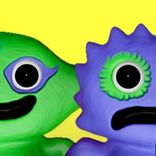


In Slime Laboratory you start as a small green blob dropped into the first room of a locked-down facility, with nothing but a jump button and the ability to flatten yourself to slip under low gaps. That single condition — small, squishy, and stuck behind walls built for something bigger — shapes almost everything that follows. Every trap in the building assumes you’re going to try to muscle through it, and the game rewards the players who realize early that Slime Laboratory is a puzzle about shape and size before it’s a puzzle about reflexes.
Absorbing loose slime scattered around a level makes your blob physically bigger, which sounds like a pure upgrade until you hit the first narrow passage that only a normal-sized blob can pass through. Crouching flattens the blob back down to its base size instantly, and learning to alternate between growing for height and shrinking for width is the single most important habit the early levels are trying to teach.
New players tend to hoard size, absorbing every scrap of slime they see because bigger feels safer. That instinct backfires constantly — a blob that’s too large to squeeze under a ledge with two white lasers overhead has to backtrack and shrink, burning seconds off a five-minute level timer that punishes hesitation.
Floppy disks scattered through each stage exist purely for score rather than progression, with red disks worth 500 points, blue worth 200, and black worth 100. Chasing every disk on a first attempt is a common mistake; most experienced players clear the level layout once before going back for a completionist run.
Spinning cubes and spinning spheres lined with spikes show up early and stay relevant for the rest of the game, rotating at a fixed pace that rewards jumping on the beat rather than reacting late. White lasers add a second layer — timing-based obstacles that don’t move but demand precise positioning to slip past without splitting your blob apart.
Gravity switchers, introduced a few levels in, flip which direction counts as “down” for a section of the stage, and disorientation here is the most common way intermediate players lose an otherwise clean run. Fans push the blob upward through vertical shafts, but jumping the moment you land on one instead of waiting for the lift to carry you is a timing mistake almost everyone makes at least once.
By the time you reach the levels where purple acid rises steadily from below, the game shifts from careful puzzle-solving to sustained vertical climbing under time pressure. These sections punish overthinking — the acid doesn’t wait for you to plan a perfect route, so committing to a platform-to-platform rhythm matters more than precision here.
Circular swings introduced around this stretch require repeated pushing to build enough swinging momentum to reach the next handhold, which trips up players used to the more static hazards from earlier levels.
Slime splitters appear in select stages and divide your blob into smaller pieces that must be reunited before reaching the checkered finish, adding a coordination puzzle on top of the usual platforming.
Every level in Slime Laboratory runs on a five-minute clock, and reactions to that limit split the community pretty evenly. Speedrun-minded players see it as generous padding that rarely comes into play once a route is memorized, while more exploratory players who want to grab every floppy disk on a first pass sometimes find themselves rushing the final stretch of a level just to beat the buzzer.
Either way, the timer keeps early levels from feeling like idle sandbox exploration, which is a deliberate trade-off the game makes early and never walks back.
This usually happens when the blob is sitting at the center of a moving or swinging platform instead of gripping a corner. Sticking to an edge rather than the middle keeps the blob stable during platform movement.
No — disks only affect your score, not level completion. Reaching the checkered finish is the only requirement, so skipping disks is a valid strategy when the timer is running low.
Pause briefly right after triggering one to reorient mentally before moving, since misjudging the new “down” direction immediately after a switch is the most common cause of falling into a hazard.
Slime Laboratory earns its lasting appeal from how consistently it turns a simple grow-and-shrink gimmick into fresh problems, level after level, right up through the acid-filled climbs near the end. Once you’ve timed a jump off a spinning cube perfectly or squeezed through a gap you were sure your blob was too big for, the appeal of just one more room becomes hard to resist.








 Fullscreen