Easter Games
Zoonomaly Unblocked
Zoonomaly Cat

Choo‑Choo Charles

Palworld
Weekly Picks
Zoonomaly Unblocked
Zoonomaly Cat
Choo‑Choo Charles
Palworld


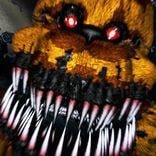
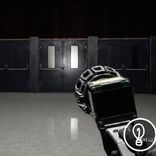
What happens when the calm, cheerful drag-and-drop rhythm of a music-mixing screen suddenly gets replaced by a flickering camera feed and a dying flashlight? That’s the exact tension Five Nights at Freddy’s Sprunki is built on. It fuses the beat-stacking mechanics fans know from music-mixing games with the night-shift dread of a security-guard survival format, and the combination lands somewhere between silly and genuinely tense depending on which night you’re on.
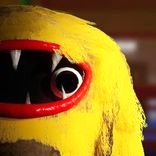
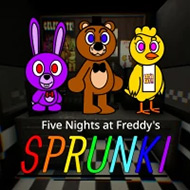
The foundation is still recognizable to anyone who has played a mixing-style game before: characters stand on stage, and dragging sound icons onto them layers in beats, vocals, and effects that loop continuously once placed. In Five Nights at Freddy’s Sprunki, the character roster gets reskinned as familiar animatronic faces — a brown bear mascot with a top hat, a tall rabbit holding a guitar, a yellow bird figure with a bib reading a cheerful greeting — each carrying its own looping sound layer instead of a generic instrument track.
Clicking a character’s body removes whatever sound is currently attached, letting players swap combinations freely until they land on a loop they like. Because the icons cycle rather than offering infinite unique options, experimentation is quick and mistakes cost nothing, which keeps the creative side low-pressure even while the horror framing looms in the background.
Saving and sharing a finished mix is part of the loop too, and it’s common to see players comparing combinations in comment sections the way they would compare high scores in other genres.
The survival half of Five Nights at Freddy’s Sprunki borrows its structure directly from night-shift formats: a limited power meter that drains faster the more you rely on lights, doors, and camera checks. Watching the cameras costs the least power, closing a door costs the most, and burning through the meter before sunrise usually ends in a jumpscare cutscene set to a distorted version of the game’s own music.
Early nights are forgiving because fewer characters are active and movement patterns are slower. By the time later nights introduce faster beats and additional characters onscreen at once, the power budget gets tight enough that checking every camera constantly is no longer sustainable.
Sound cues matter as much as visuals here. Distinct clattering, footsteps, or distorted musical stings signal a character has moved rooms, and relying on audio instead of constant camera flipping is the difference between surviving night 4 and running out of power at 3 AM.
Not everyone agrees on how Five Nights at Freddy’s Sprunki paces its difficulty curve. Some players feel the jump between night 3 and night 4 spikes too sharply compared to the gentle opening nights, while others argue the spike is what keeps repeat playthroughs interesting instead of predictable. Both camps generally agree the final night rewards players who learned to read audio cues rather than depend on constant visual confirmation.
Casual mixers who came in purely for the music side sometimes bounce off the survival pressure entirely, while horror-focused players tend to rush through the creative screen just to reach the next night faster.
Five Nights at Freddy’s Sprunki works precisely because it refuses to pick a lane — it’s a genuine music toy wearing a survival-horror skeleton, and the tension between those two halves is what keeps players returning after the bear mascot’s jumpscare catches them off guard for the third time. Whether you’re chasing a clean five-night run or just hunting for the perfect loop combination, the game rewards paying attention to both its rhythm and its dread in equal measure.



 Fullscreen