Easter Games

Zoonomaly Unblocked

Zoonomaly Cat

Choo‑Choo Charles

Palworld
Weekly Picks
Zoonomaly Unblocked
Zoonomaly Cat
Choo‑Choo Charles
Palworld




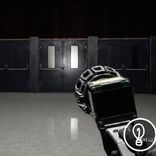
The Little Giant’s size never actually changes once across all sixty levels, despite a name that sounds like it should be about growing and shrinking. The title describes the character himself — a small figure with an oversized name on a quiet journey to find himself. The real hook has nothing to do with scale: wall jumps, double jumps, and diamonds that block progress until every last one is collected.
| Genre | Puzzle-platformer |
| Controls | Directional movement, jump, wall jump, double jump |
| Levels | 60 |
| Core objective | Collect every diamond in a level to unlock the next |
| Main hazards | Spikes and bullets |
Players expecting a size-shifting gimmick recalibrate within the first level. Nothing grows or shrinks the character, and scale never becomes a mechanic across the campaign.
Instead you get a demanding movement toolkit: wall jumps off vertical surfaces and a double jump chained on top of a regular one. Those two tools carry all sixty levels without a new ability ever appearing later.
The minimalist visual style backs up the same idea — clean geometric levels with no clutter, which matters once platforming gets precise enough that visual noise costs a diamond.
Every level hides a set number of diamonds, and collecting all of them unlocks the next one. Reaching the exit without every diamond just leaves you stuck rereading the same layout.
This is where the game quietly punishes rushing. A diamond tucked behind a wall-jump chain often means backtracking through active hazards, which is where most avoidable deaths happen.
Completionist players spend far more time per level than the platforming alone suggests, simply because every diamond has to be accounted for.
The most common beginner mistake is treating the double jump as a backup instead of a planned part of every gap, which leaves players falling short on sections built assuming it gets used mid-arc.
Wall jumping needs commitment to a wall with enough speed to stick, and new players often approach too slowly and slide down instead:
Once those tools stop feeling like separate inputs, the early levels stop being a wall.
Early levels give plenty of flat ground between hazards. That changes gradually — by the levels in the twenties, spike clusters appear alongside diamond placement, forcing precision in timing and routing at once.
Bullets are a distinct escalation from spikes, since they move and force reactive timing rather than memorized positioning. A level that took half a minute early on can eat several minutes of retries once bullets join in.
By the final stretch, the campaign demands every tool at once — wall jumps into double jumps, timed around bullets, while tracking diamonds with almost no flat recovery ground left.
Advanced players treat spike-heavy sections as rhythm puzzles rather than reaction tests, memorizing exact jump timing instead of reacting live.
A few techniques carry over once difficulty ramps up:
Once bullets and spikes overlap, usually in the back half of the campaign, the margin for error shrinks to almost nothing.
One thing that only becomes obvious after failing a section repeatedly is how consistent the physics stay — the jump arc never varies, so a death is almost always a timing error rather than bad luck.
Longtime players describe a full-diamond, no-backtrack clear as the real completion goal, distinct from simply reaching the exit — a distinction The Little Giant enforces structurally.
The most divisive part is the diamond-gating itself. Some like that it forces engagement with a level’s full layout; others find it tedious once the platforming is cleared and one stray diamond remains.
The full campaign runs sixty levels, with difficulty climbing gradually — the back half leans much more on combining wall jumps, double jumps, and bullet timing.
Yes. Missing even one diamond leaves a level incomplete and blocks progress to the next.
The framing is light — a small character on a personal journey of self-discovery — but the game leans almost entirely on platforming. The sixty levels themselves are the substance.
The Little Giant never turns into the size-shifting puzzle game its name seems to promise, and that’s fine once you stop waiting for it — what’s actually there is a sixty-level platformer built around two movement tools and a diamond requirement that refuses to let anyone skip past a level’s design. By the time bullets overlap with spike clusters in the back half, the wall jump and double jump you learned early are all that stand between you and another restart.







 Fullscreen