Easter Games
Zoonomaly Unblocked
Zoonomaly Cat
Choo‑Choo Charles
Palworld
Weekly Picks
Zoonomaly Unblocked
Zoonomaly Cat
Choo‑Choo Charles
Palworld

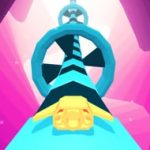
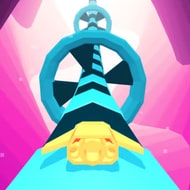
The ship in Supernova never slows down on its own — the only thing that resets its speed is a crash, and a crash is also the only way a run ends.
| Genre | Arcade / Skill |
| Platform | Browser |
| Core Loop | Dodge, survive, accelerate |
| Progression | Unlock new ships |
| Score Basis | Distance and streak |
No two runs in Supernova look the same — the corridor you’re flying through is generated fresh each attempt, so memorizing a fixed layout the way a level-based platformer rewards simply isn’t an option here.
What the game tracks instead is a streak: how long you can keep threading gaps without clipping an obstacle, since speed climbs the longer that streak holds. The streak is the real currency, not a level number, and losing it resets both your pace and your run.
Early attempts feel slow enough to read every gap coming; the difficulty curve in Supernova is really just that pace compounding faster than most players expect.
New players consistently die trying to fly in a straight line through narrowing gaps, when the ship actually responds better to small angled corrections than to full stops.
That’s where a micro-drift — a short angled nudge instead of a hard turn — comes in. Threading a gap with one costs almost no speed, while overcorrecting with a full turn usually clips the edge anyway.
Most runs in Supernova don’t end on the hardest-looking obstacle; they end a few seconds later, once accumulated speed turns a gap that used to be easy into one that punishes the same late reaction.
Players chasing a personal best treat every crash as a data point on exactly when their reactions stopped keeping pace, rather than blaming the obstacle itself.
Clearing runs unlocks new ships with different silhouettes, and regulars debate how much they actually change beyond appearance — some players insist certain hulls read tight gaps more clearly, others treat the whole roster as cosmetic.
Casual players tend to stick with whichever ship they unlocked first, while players optimizing for a longer streak often cycle through several looking for one that suits their reaction speed.
Where players broadly agree is that the difficulty never plateaus in Supernova — once a hull is unlocked, the obstacle density at high speed is the same test regardless of which ship is flying through it, which is exactly why casual players and personal-best chasers can watch the same replay and read it completely differently.
Supernova doesn’t hide behind a story or a fixed set of levels — every run is the same procedurally generated bet between how long a streak holds and how fast the ship is now moving. Once a micro-drift becomes second nature, the corridor stops feeling procedurally random and starts feeling like a rhythm worth chasing again.



 Fullscreen