Easter Games

Zoonomaly Unblocked

Zoonomaly Cat

Choo‑Choo Charles

Palworld
Weekly Picks
Zoonomaly Unblocked
Zoonomaly Cat
Choo‑Choo Charles
Palworld




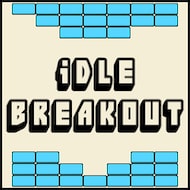
You click one brick, watch a crack spread across its face, and by the time it pops you’ve already opened the shop menu to buy something that will keep doing that clicking for you. That’s the hook of Idle Breakout: a brick-breaking screen that quietly turns into a management puzzle the moment you stop touching it, handing the clearing work to a growing squad of automated balls.
| Genre | Idle / Incremental Breakout |
| Platform | Browser, desktop and mobile |
| Core Mechanic | Automated ball-based brick destruction |
| Ball Types | Six: Basic, Plasma, Sniper, Scatter, Cannon, Poison |
| Progression | Prestige reset for permanent Gold Bar bonuses |
A wall of numbered bricks sits at the top of the screen, and a Basic Ball bounces around chipping away at whichever one it hits. Each brick shows a number for how many hits it takes to break, and cashing that in buys another ball, then another, until the screen is a chaotic mess of ricochets doing your job for you.
There’s no aiming and no timing window to master here.
Bricks color-shift from yellow toward red as hit requirements climb. It’s the fastest visual read casual players lean on to tell whether a loadout can keep pace or needs an upgrade.
The most common early mistake is hoarding Basic Balls past the point they pay for themselves. They’re cheap early, but a screen full of them stalls against anything colored red, while upgraded balls routinely outperform a crowd of unupgraded ones.
The second habit that costs people time is refusing to prestige. Resetting feels like throwing away progress, but the Gold Bar system is built so reset runs climb faster, and treating the first reset as scheduled maintenance beats treating it as a failure.
Ignoring the power-ups in the corner is a smaller mistake. Aside from the x2 Gold effect, most boost output for a short window, and letting them sit unused during a pushed session wastes easy damage.
Scatter Ball is the most misunderstood tool. It splits into weaker balls on contact, so stack it against dense low-health clusters instead of one tough target. Sniper Ball retargets automatically, shining once the board thins out.
By a boss wave, optimizers stop asking how many balls they own and start asking which of the six types counters what’s on screen — that reframing is where the game gets deeper than it first suggests.
There’s a specific overlapping clatter once ball count is high enough that several hit bricks in the same instant. Regulars describe it as the moment their build caught up to the wave ahead.
Community shorthand only clicks once you’ve run a few resets. A gold run means a prestige pass aimed purely at banking Gold Bars, while a DPS wall marks the point where damage stops scaling with brick difficulty, forcing a build change.
A completionist chasing every Skill Tree node treats each prestige reset as a puzzle worth optimizing. That mindset shows up constantly in threads without being treated as the only right way to play.
Not everyone loves the pacing. The mid-game stretch between resets drags once a ball type stops feeling novel, and that gripe comes up often enough to be fair.
Idle Breakout never asks for fast hands, but it does ask for attention — to which ball is dead weight, to when a boss fight is worth pausing the grind for, to the moment a Scatter Ball split finally pays off. Strip away the idle framing and what’s left is a fiddly optimization game wearing a brick-breaker’s clothes.






 Fullscreen