Easter Games
Zoonomaly Unblocked
Zoonomaly Cat

Choo‑Choo Charles

Palworld
Weekly Picks
Zoonomaly Unblocked
Zoonomaly Cat
Choo‑Choo Charles
Palworld




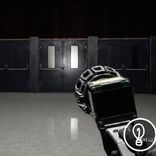
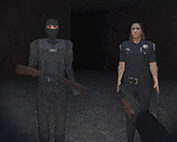
The flashlight in I have to go only lights a narrow cone in front of you, and that single fact shapes every decision the game asks you to make. You never get a wide view of wherever you are, just the sliver the beam covers, with the rest left to guess. That’s the entire tension of the game, built around how little you’re allowed to see while something past the edge of the light is clearly moving toward you.
| Genre | Horror, Chase |
| Perspective | First-Person |
| Core Tool | Handheld flashlight |
| Objective | Reach the exit before you’re caught |
| Session Length | Short, single-run rounds |
Once a round starts, the pattern is simple to describe and harder to survive: move, listen, don’t stop for long. The game gives you a route rather than an open map, so tension comes from pacing against whatever is closing in behind you. Within the first minute you know the rules — sprint too much and stamina runs out with nowhere to hide; move too cautiously and the gap behind you closes instead.
What players get wrong early is treating the flashlight like a weapon, waving it into every corner. Mostly it just tells you where you aren’t yet in danger. Players who last longer ration it, saving the beam for doorways and dead ends.
The game gets harder less through new mechanics and more through spacing. Early stretches give long, quiet gaps between chase beats, enough room to get careless. By the back half those gaps shrink, and the shift behind you lands closer to the exit than it did the first time.
The most talked-about detail among players is the audio cue before a chase beat kicks in — a low shift in the ambient track rather than a jump-scare sting. Players who catch it early get a head start toward the nearest exit route.
Players who enjoy pure chase-horror get the most satisfaction from I have to go, since there’s no combat to fall back on — only movement and route memory. Players expecting a puzzle-driven horror game bounce off it fastest.
It’s worth being honest that I have to go doesn’t hide much behind its short runtime. There’s no elaborate story between chase segments and no named location beyond the corridor you’re running through. It commits fully to one feeling and executes it cleanly rather than padding it out.
I have to go earns its title honestly: every round is built around one urgent need to get out before whatever is behind you catches up, and the narrow flashlight beam is what makes that urgency feel physical rather than scripted.



 Fullscreen