Easter Games

Zoonomaly Unblocked

Zoonomaly Cat

Choo‑Choo Charles

Palworld
Weekly Picks
Zoonomaly Unblocked
Zoonomaly Cat
Choo‑Choo Charles
Palworld





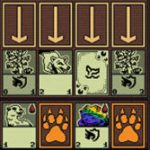
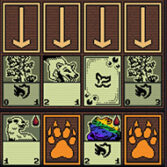
What actually happens when you flip the first two tiles in FloppyScryption? Nothing dramatic — the board holds a shuffled set of face-down tiles, you turn two at a time, and the game quietly builds a picture of the layout in your head. The name suggests something stranger, but the build is a tile-matching game, closer to a memory card set than any card-battling system.
| Genre | Puzzle, Memory Matching |
| Platform | Browser |
| Core Objective | Clear the board by matching tile pairs |
| Controls | Mouse click or tap |
| Ideal For | Short focused sessions |
Every round starts with a grid of face-down tiles, identical on the back. You flip two per turn; matches stay revealed, misses flip back down.
The board scales as you clear rounds, so a small opening grid can end in a much denser one. Pressure comes from memory alone, not a failure state.
That’s a contrast to horror-adjacent titles this build sits next to on browser game pages. FloppyScryption stays calm and entirely about recall.
New players treat each flip as a guess instead of a note. A tile you fail to match is still useful information.
A fast clear versus a slow one comes down to building a mental map instead of clicking at random.
Some rush the first flips before they’ve seen the board, burning turns on tiles they already forgot.
Difficulty isn’t scripted through enemies or timers; it’s purely board size and tile similarity. Early boards clear in a handful of flips.
By the time a run reaches a larger grid, the same recall skill has to hold far more positions. The rules never change — only the amount you remember.
This flat curve gets debated. Some like that nothing is added beyond board size; others wish a later stage introduced something new.
Regulars use a fixed scanning order instead of flipping wherever their eye lands, working the grid corner to corner.
Some flip a tile they suspect is a dead end early, just to confirm a pair next turn. Forum threads call this “banking” a tile.
None of this is explained in the game itself; it’s a habit players pick up from repetition.
FloppyScryption ends up a small, honest memory game hiding behind a name that promises something bigger. Once you drop the card-battler expectation, the growing board size and the “banking” habit carry a short session on their own.





 Fullscreen